In my last post, I shared some of the art activities we facilitate for our community center’s dementia support group. Today, I want to highlight a specific craft I designed for them: a traditional origami exercise that results in a game popular in many cultures, including both Iran and England.
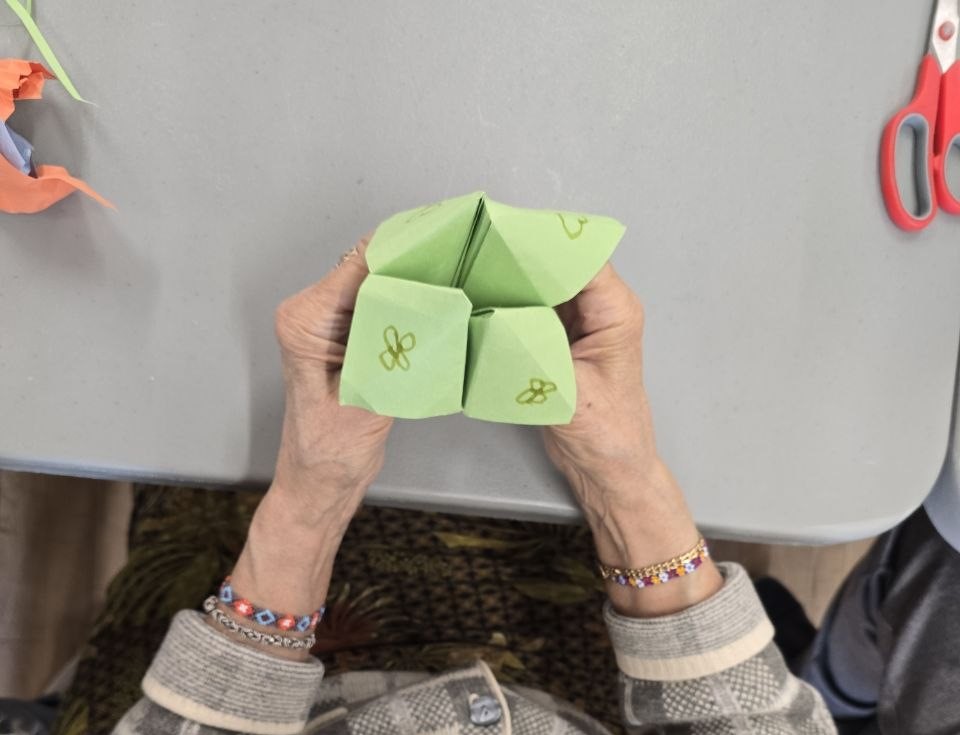
In both traditions, children often use these paper creations for “fortune-telling”—usually playfully predicting things like future careers or family life.
The Process I began by showing the group a finished sample and sharing the history of the game. Explaining the “story” behind the craft helps set the stage and gives everyone a clear goal. We moved forward step-by-step to ensure no one was left behind:
- Preparation: We started by turning a standard letter-sized paper into a perfect square.
- Folding: We folded the paper diagonally both ways to find the exact center.
- The Base: We folded each corner into the center, then flipped the paper over and repeated the process.
- The Reveal: Finally, we folded the small square horizontally and vertically to create the finger pockets.
- Personalization: I asked the participants to write down how they would like to spend their time on the inside flaps.
For those who found it difficult to think of words, we used simple drawings instead—a heart to represent time with loved ones, or a steaming mug for a coffee break.
A Bridge to the Past The most moving part of the session wasn’t the folding itself, but the conversation it sparked. As we worked, we talked about our childhood memories of this game. It was incredible to see faces light up as they remembered playing with these same paper shapes decades ago. Whether they grew up in Tehran or London, the nostalgia was a universal language. Sharing these stories helped everyone feel more connected, turning a simple craft into a shared journey through memory.
Why Origami Matters for Dementia Care This activity is more than just a game; it is a powerful therapeutic tool.
- Dexterity: The precise folding helps maintain fine motor skills and hand-eye coordination.
- Cognitive Challenge: It requires spatial orientation and following a sequence of logical steps.
- Confidence: Seeing a flat piece of paper transform into a 3D object provides a tangible sense of accomplishment and a boost in self-esteem.
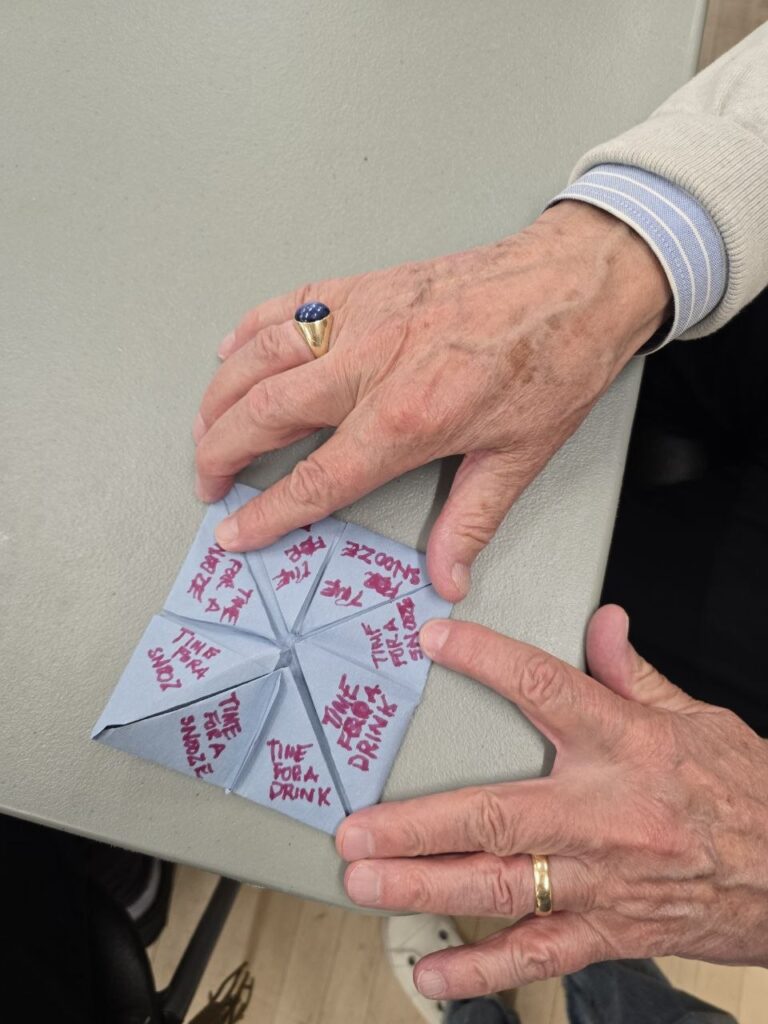
Seeing the group interact with their finished projects—and hearing the laughter as they “told each other’s fortunes”—showed just how much a simple piece of paper can spark joy and connection.
Leave a Reply