Blog

  • Spring Trees with Balloon Printing

    Today, we had a wonderful time exploring a new activity that combined sensory play, creativity, and a little bit of physical movement. Since Vancouver is looking especially beautiful this spring, we decided to create spring tree crafts inspired by the colorful trees and blooming season around us.
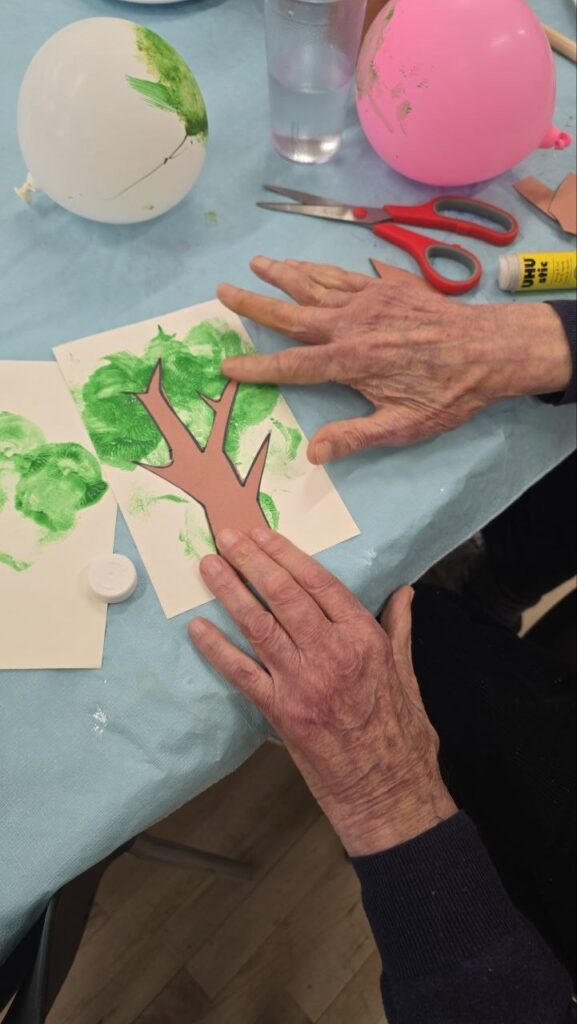
    For this activity, we used balloons for printing to create the tree canopy, along with paper cutting and gluing to build the tree trunk and complete the artwork. Everyone really enjoyed the hands-on process , from choosing colors and experimenting with prints to assembling their own unique trees.
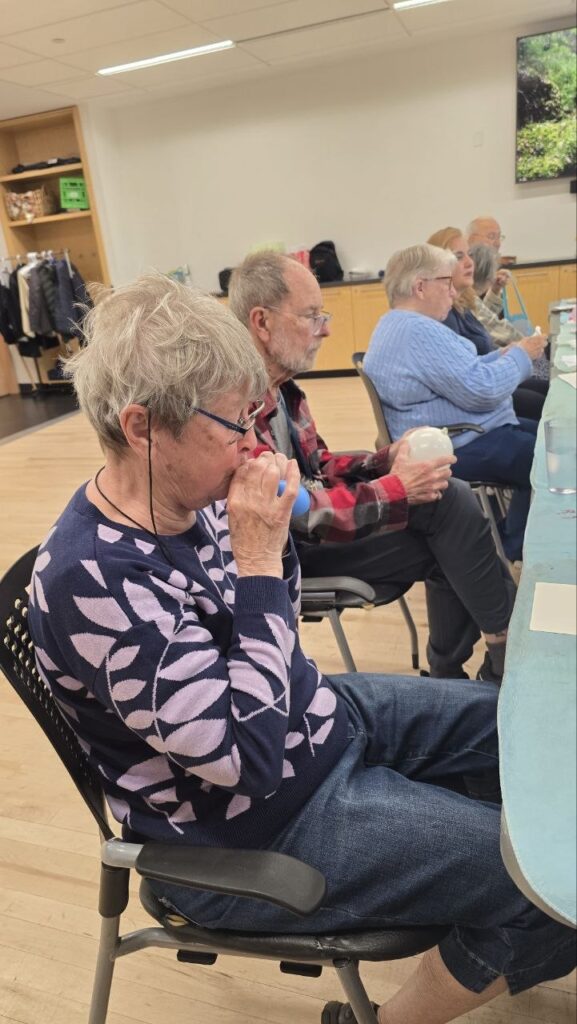
    What made this activity especially meaningful was how many different skills it encouraged in a natural and enjoyable way. Even inflating the balloons added a gentle physical exercise component, encouraging breathing control and light upper-body movement. Activities like these can help stimulate both the mind and body while also creating opportunities for social connection, confidence, and self-expression.
    The balloon printing provided a fun sensory experience through texture, pressure, and color exploration. Cutting, squeezing, holding, and gluing helped support fine motor skills and hand coordination, which are very important for individuals living with dementia.

    At the end of the session, everyone proudly took home their own one-of-a-kind spring tree craft. It was lovely to see how much joy and accomplishment such a simple creative activity could bring.
  • Earth Day Art and Conversation

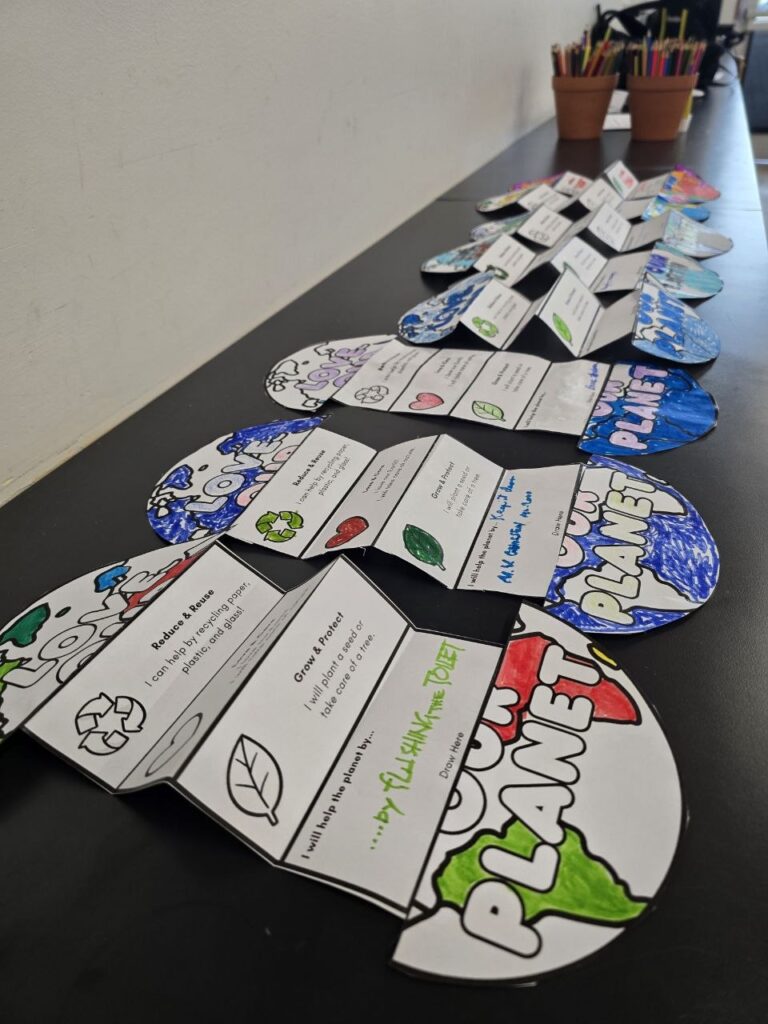
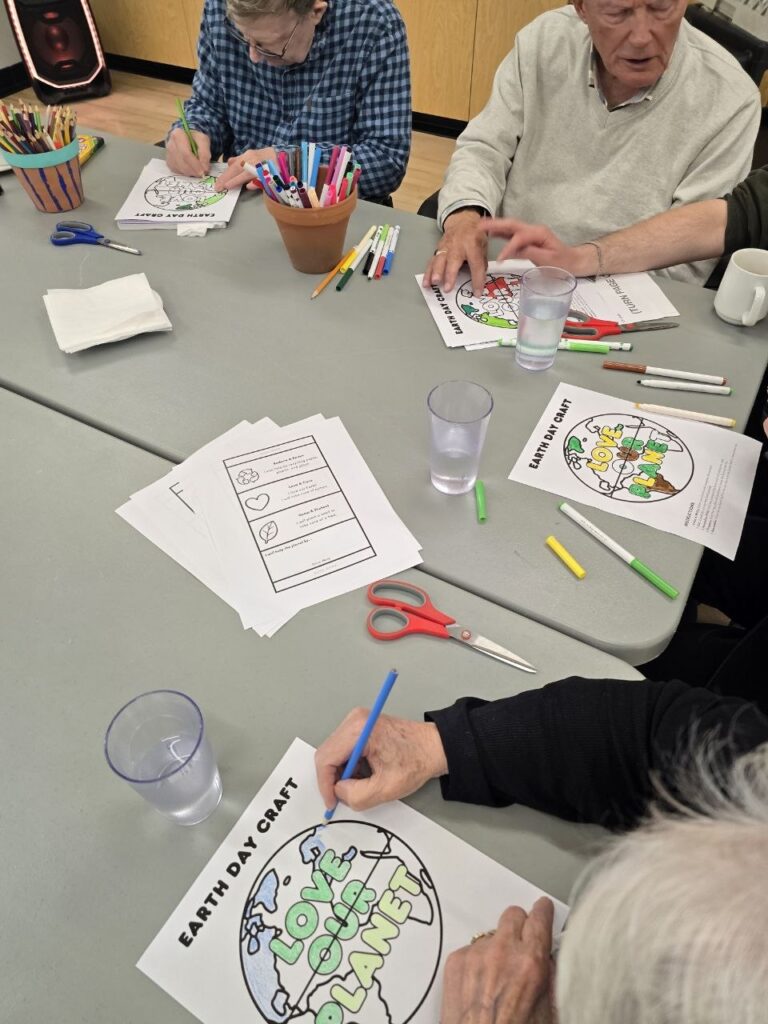
    For this activity, we used Earth Day as an opportunity to talk about our planet and discuss the different ways we can care for the Earth and become better residents of it. The session encouraged participants to share their thoughts, ideas, and personal experiences related to nature, recycling, caring for the environment, and simple everyday habits that can help protect our world.

    The activity involved a variety of creative and hands-on tasks, including coloring, cutting with scissors, aligning and folding paper by following patterns, gluing pieces together, and writing down some of their thoughts and messages about caring for the Earth.

    Beyond the creative aspect, the group discussions created meaningful opportunities for social interaction, memory recall, conversation, and self-expression in a warm and supportive environment.

    It was wonderful to see group engagement, sharing ideas, and taking pride in creating meaningful artwork inspired by Earth Day.

  • 3D Appreciation Cards

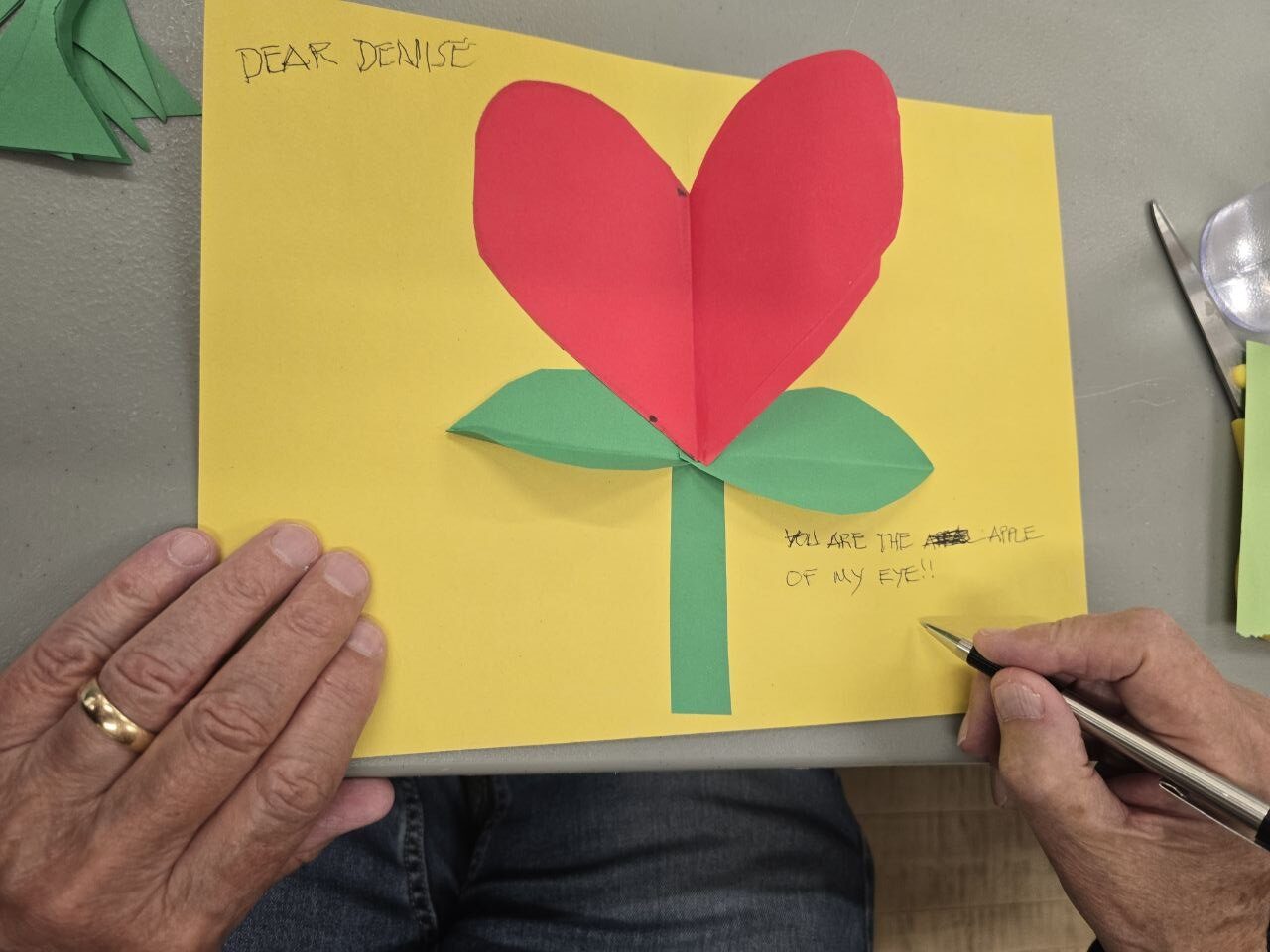
    This week’s art activity was inspired by Volunteer Week and the importance of appreciating the kind and caring people who support us without expecting anything in return. We wanted to create something meaningful that would encourage both creativity and gratitude.

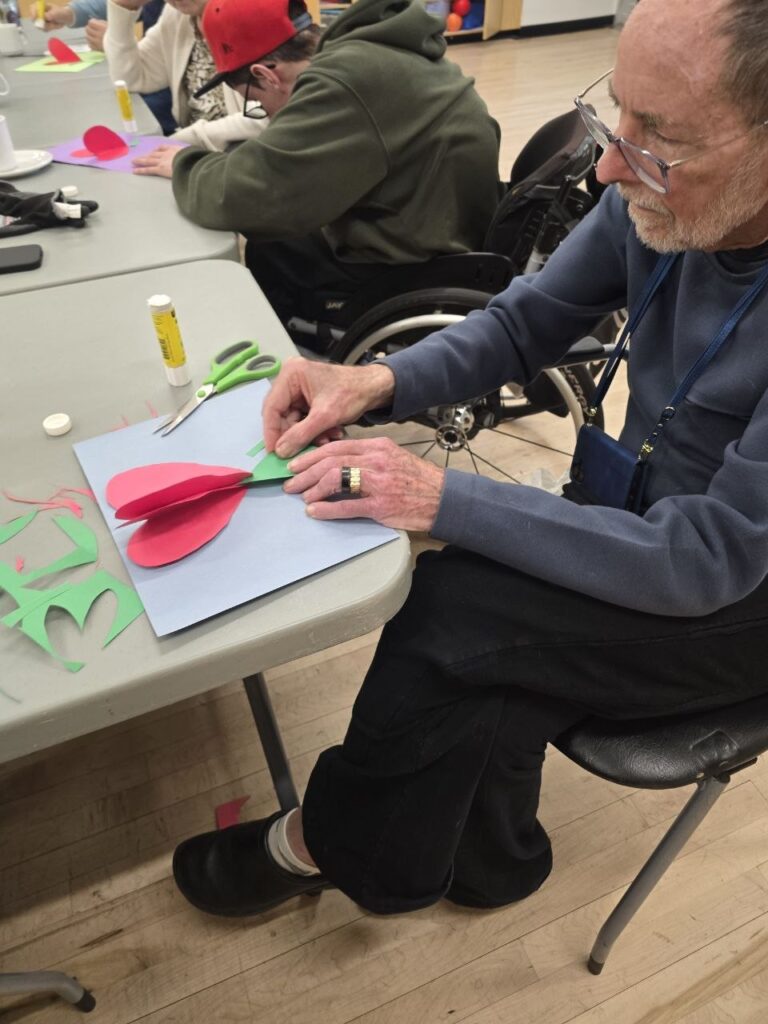
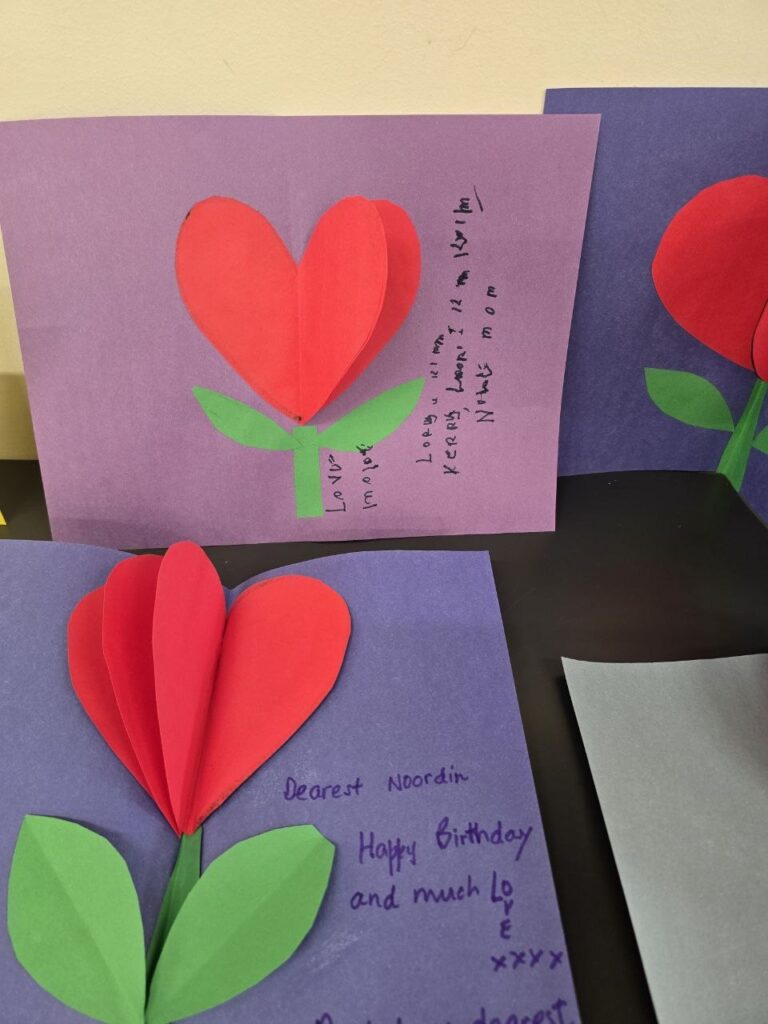
    For the activity, participants made 3D appreciation cards and wrote thoughtful messages for someone special in their lives. The process involved following step-by-step instructions, folding paper, drawing shapes, cutting along lines with scissors, and gluing different pieces together to complete the cards.

    Beyond being a fun craft, the activity also supported important cognitive and motor skills for individuals living with dementia. Following sequential steps encouraged attention, concentration, and problem-solving, while cutting, folding, and gluing helped strengthen fine motor coordination and hand control. Most importantly, the activity encouraged participants to reflect on the positive people around them and express feelings of appreciation and connection.

    The highlight of the session came at the end of the day when caregivers arrived for pick-up. Seeing the smiles and happiness on their faces as they received the handmade cards made the experience even more special and meaningful for everyone involved.

  • Art and Memory: Fortune Telling and Origami

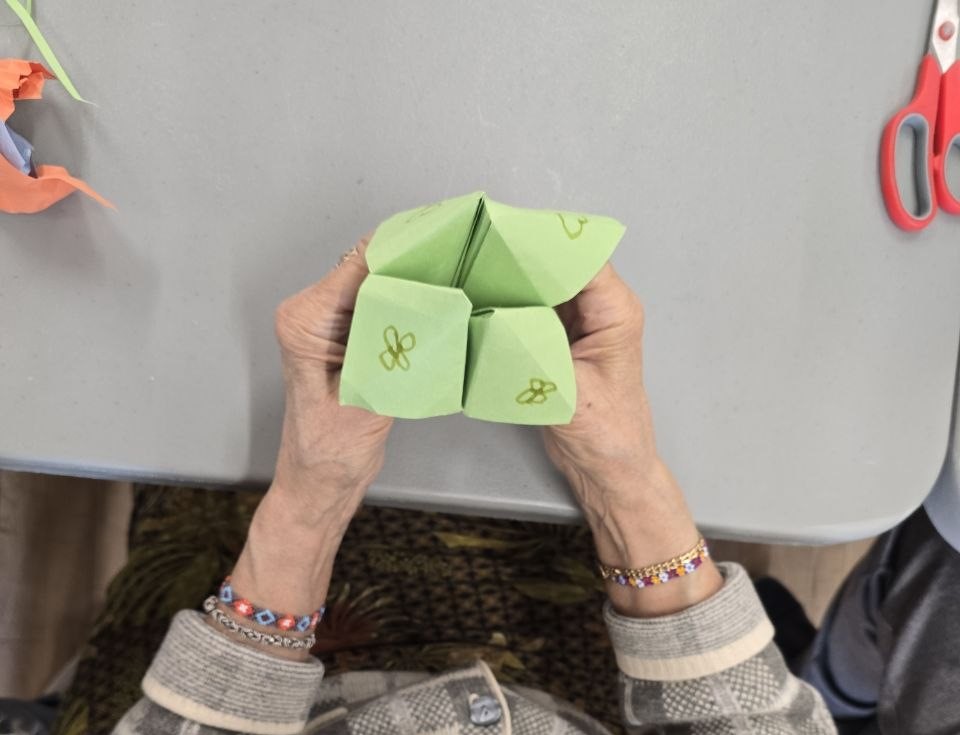
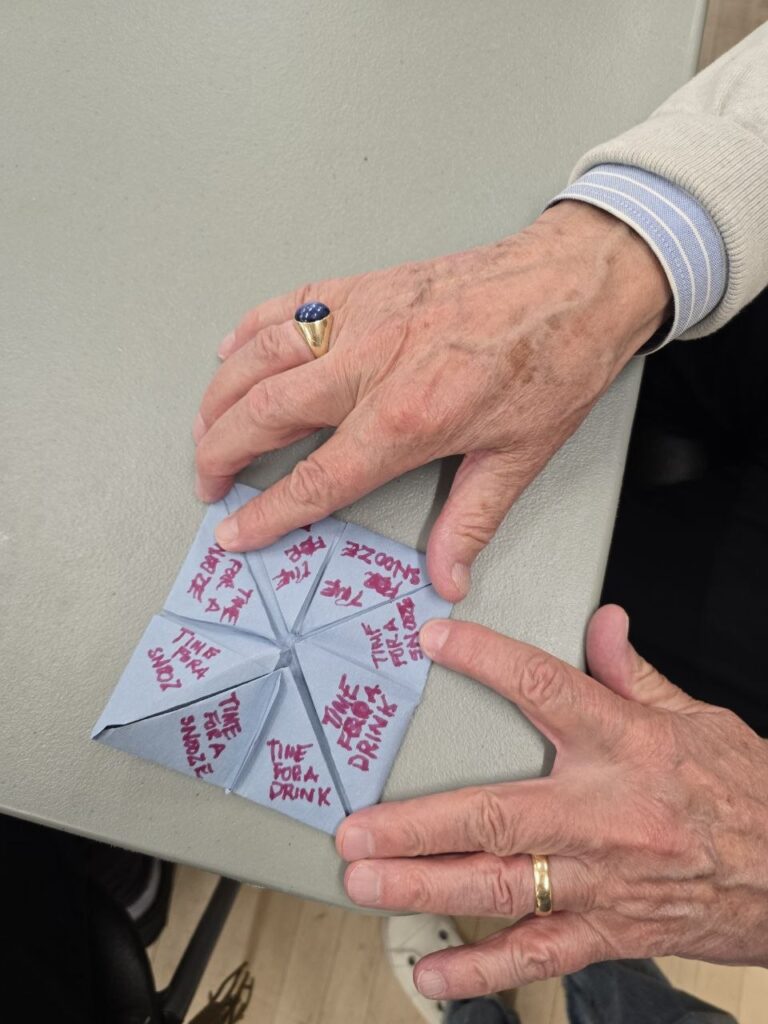
    In my last post, I shared some of the art activities we facilitate for our community center’s dementia support group. Today, I want to highlight a specific craft I designed for them: a traditional origami exercise that results in a game popular in many cultures, including both Iran and England.

    In both traditions, children often use these paper creations for “fortune-telling”—usually playfully predicting things like future careers or family life.

    The Process I began by showing the group a finished sample and sharing the history of the game. Explaining the “story” behind the craft helps set the stage and gives everyone a clear goal. We moved forward step-by-step to ensure no one was left behind:

    1. Preparation: We started by turning a standard letter-sized paper into a perfect square.
    2. Folding: We folded the paper diagonally both ways to find the exact center.
    3. The Base: We folded each corner into the center, then flipped the paper over and repeated the process.
    4. The Reveal: Finally, we folded the small square horizontally and vertically to create the finger pockets.
    5. Personalization: I asked the participants to write down how they would like to spend their time on the inside flaps.

    For those who found it difficult to think of words, we used simple drawings instead—a heart to represent time with loved ones, or a steaming mug for a coffee break.

    A Bridge to the Past The most moving part of the session wasn’t the folding itself, but the conversation it sparked. As we worked, we talked about our childhood memories of this game. It was incredible to see faces light up as they remembered playing with these same paper shapes decades ago. Whether they grew up in Tehran or London, the nostalgia was a universal language. Sharing these stories helped everyone feel more connected, turning a simple craft into a shared journey through memory.

    Why Origami Matters for Dementia Care This activity is more than just a game; it is a powerful therapeutic tool.

    • Dexterity: The precise folding helps maintain fine motor skills and hand-eye coordination.
    • Cognitive Challenge: It requires spatial orientation and following a sequence of logical steps.
    • Confidence: Seeing a flat piece of paper transform into a 3D object provides a tangible sense of accomplishment and a boost in self-esteem.

    Seeing the group interact with their finished projects—and hearing the laughter as they “told each other’s fortunes”—showed just how much a simple piece of paper can spark joy and connection.

  • Designing for Connection: An Easter Activity for Dementia Care

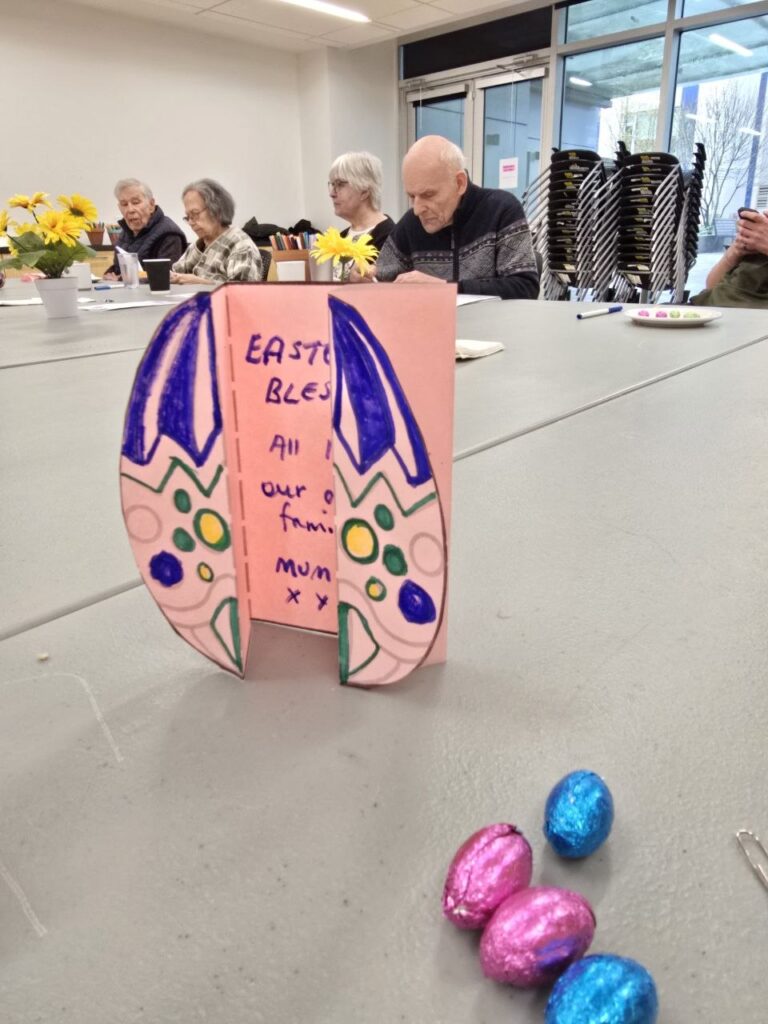
    Today, we worked on a simple Easter card, and it reminded me of something vital. I realized during the session that creating something they can actually give to a loved one is incredibly powerful. It is a gift for the patient to feel capable and purposeful, and it is deeply rewarding for the family to receive something handmade.

    The Power of the “Blueprint”

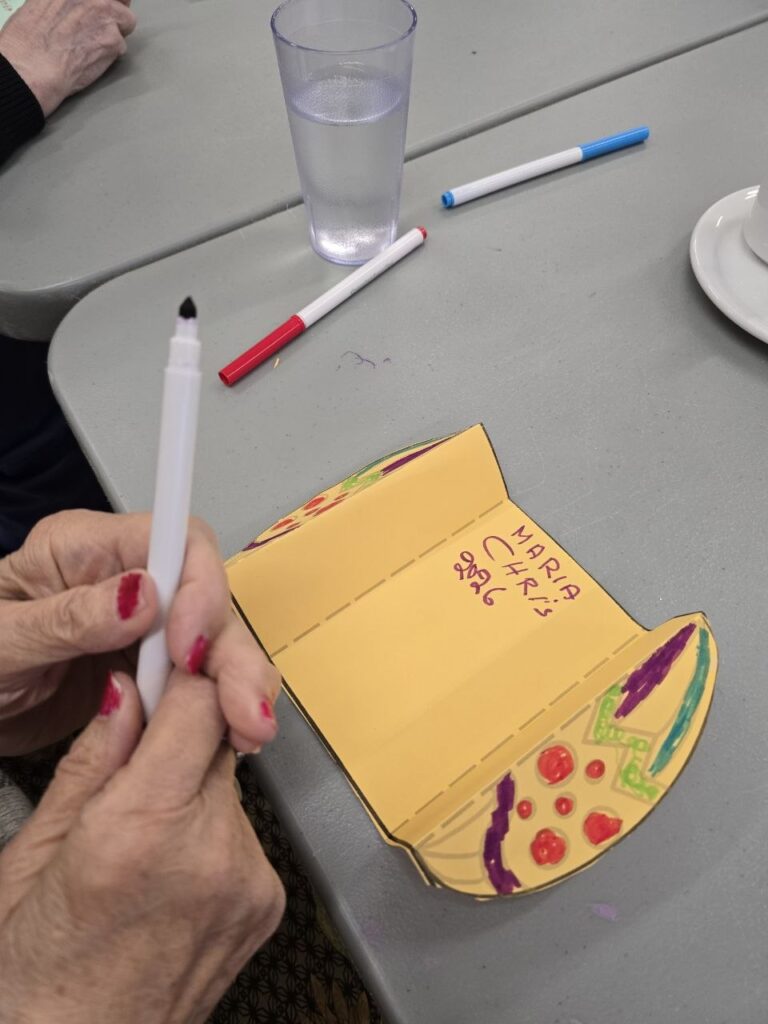
    To make the process easier to follow, I created a “blueprint” or “ink-line” for the card. Instead of just giving verbal instructions, I used visual cues to divide the project into manageable steps.

    One thing I’ve learned is that it’s helpful to show the final project at the very beginning so they see the goal—the “big picture”—but it’s best not to explain the full process at once. That leads to sensory overload. We go step-by-step, ensuring everyone catches up before moving to the next task.

    • The Cut: I explained that the bold, thick continuous lines are for cutting. We started there, using scissors to follow the path.
    • The Fold: Once the bold lines were cut, we moved to the dashed lines. These were our folding guides. We weren’t too picky about the direction of the fold (inward or outward); the goal was simply to get that physical crease there and feel the paper change shape.

    Coloring and Connection

    When the base was ready, we moved to markers and pencils. For many patients, coloring is incredibly calming. However, they often need a little “nudge.” Choosing a color from a big box can be overwhelming—what we call “decision paralysis”—so I often give a small hint or help them pick the next shade to keep the momentum going.

    The Final Touch: A Signature of Self

    At the end, I asked them to write a small note, sign their name, and date the card.

    In dementia care, we use every excuse to remind them of the date as an orientation exercise. But more importantly, asking them to sign their name is an exercise in identity. It is a small, defiant act of not forgetting themselves.


    A Note for Fellow Caregivers: If you are trying this at home, remember that the “perfect” card isn’t the goal. The goal is the pride they feel when they hand a finished piece of art to their child or spouse and say, “I made this for you.”

  • A Hand-Held Bouquet: Art from the Heart for our Caregivers

    Being a caregiver is one of the most selfless roles a person can take on. It is a journey of deep love, but it can also be exhausting and quiet. In our group, we wanted to find a way for our members to show a sign of appreciation—a small “thank you”—to the loved ones who support them every single day.

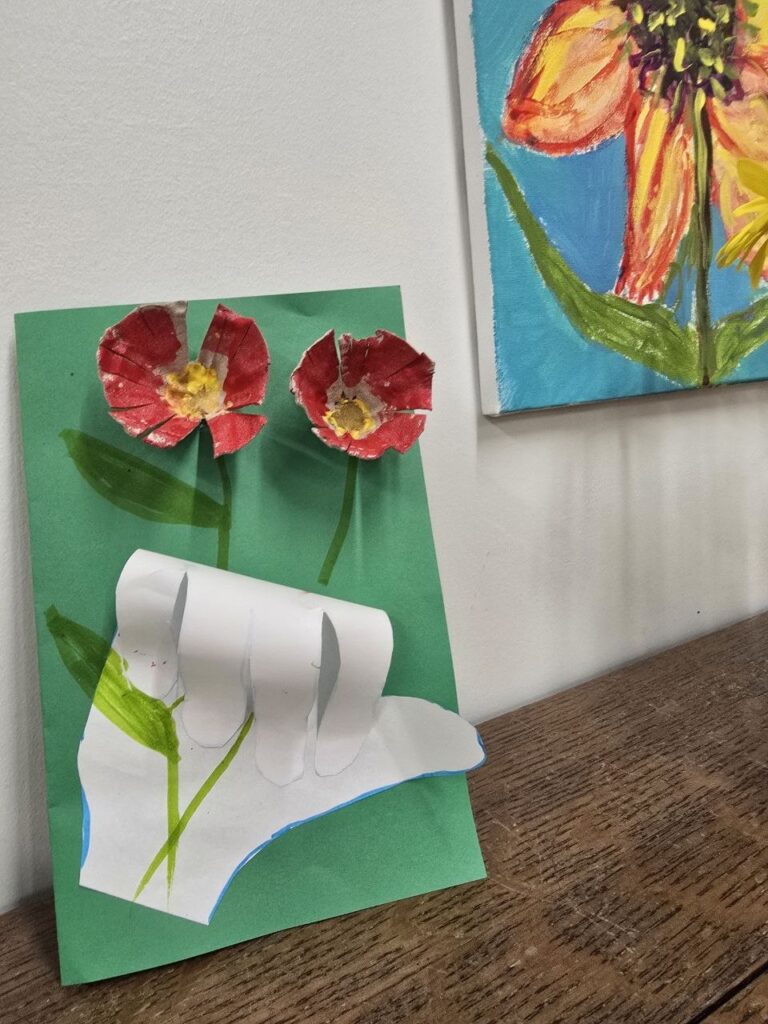
    With spring in the air, we decided to create a bouquet of flowers. But we didn’t want a simple store-bought card; we wanted something deeply personal. We wanted the card to literally be a piece of themselves.

    The “Hand-Made” Process

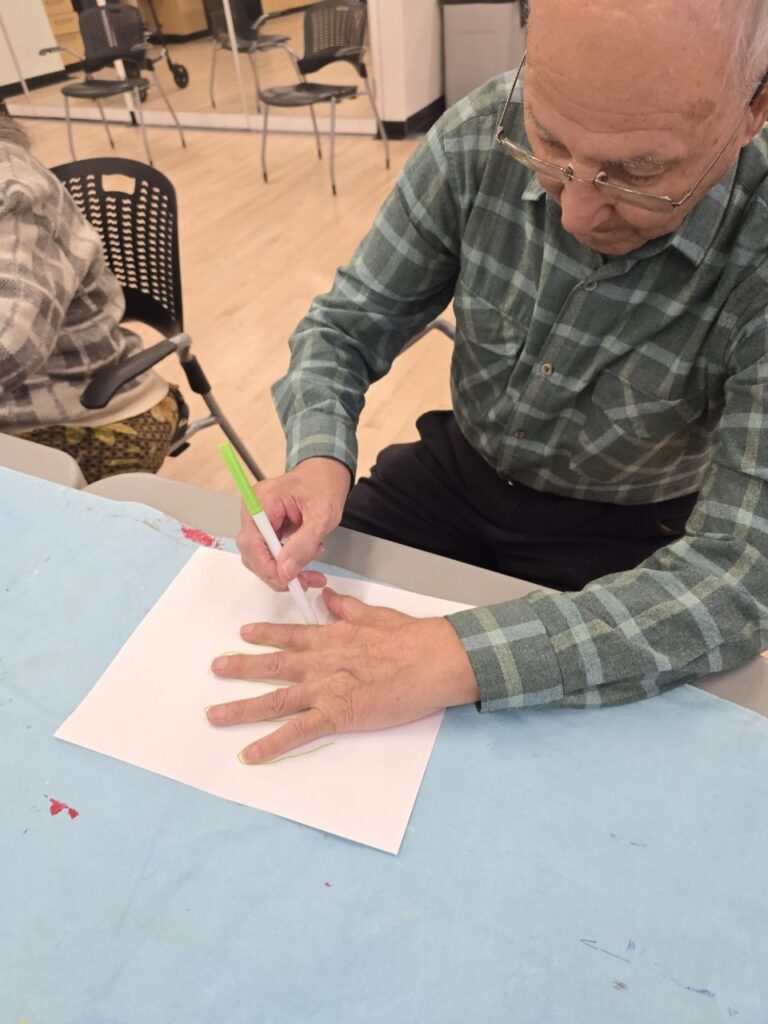
    The project began with a very intimate first step: tracing. We asked each member to place their hand on a sheet of cardstock and carefully follow the lines of their own fingers with a pencil. There is something very grounding about tracing your own hand; it’s a moment of connection with your own body.

    The Creative Steps:

    1. The Foundation: Once the hands were traced, the participants used scissors to cut along the lines. This is a fantastic exercise for grip strength and focus.
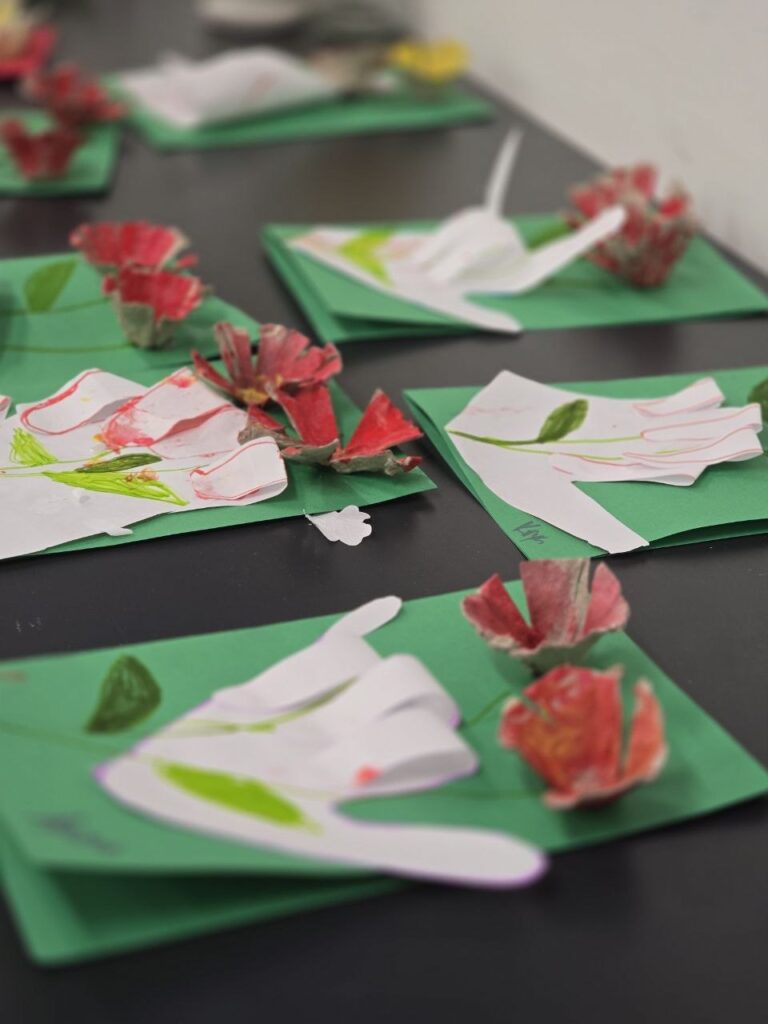
    2. Upcycled Blooms: To give the bouquet a 3D effect, we used egg cartons! By cutting the “cups” of the carton, we created raw flower blossoms that were ready to bloom.
    3. Color & Dimension: Every participant chose their own palette, painting and coloring their egg-carton flowers before gluing them onto the “fingers” of their paper hand.

    The result was a 3D bouquet where the paper hand acts as the vase, “holding” the flowers out to the recipient.

    The Power of Appreciation

    As the group worked, the atmosphere was different than usual. There was a sense of purpose. They weren’t just making art for themselves today; they were making a gift.

    When the caregivers arrived at the end of the four-hour session, the room transformed. Seeing a husband, daughter, or wife receive a 3D bouquet made from the literal shape of their loved one’s hand was incredibly moving.

    Why this project worked:

    • Tactile Stimulation: Working with the rough texture of the egg cartons and the smooth cardstock provides great sensory feedback.
    • Fine Motor Skills: The precision required to trace around fingers and cut out those small gaps is an excellent way to maintain dexterity.
    • Emotional Connection: Providing a way for a person with dementia to “give back” helps restore a sense of agency and pride.

    It was a beautiful reminder that a small gesture—made by hand and given with love—can make a caregiver’s entire week.

  • New Beginnings: Origami Fish and the Stories They Carry

    With the Persian New Year (Nowruz) approaching, our group has been using the changing seasons as an “excuse” to explore different cultures and the many ways the world celebrates spring.

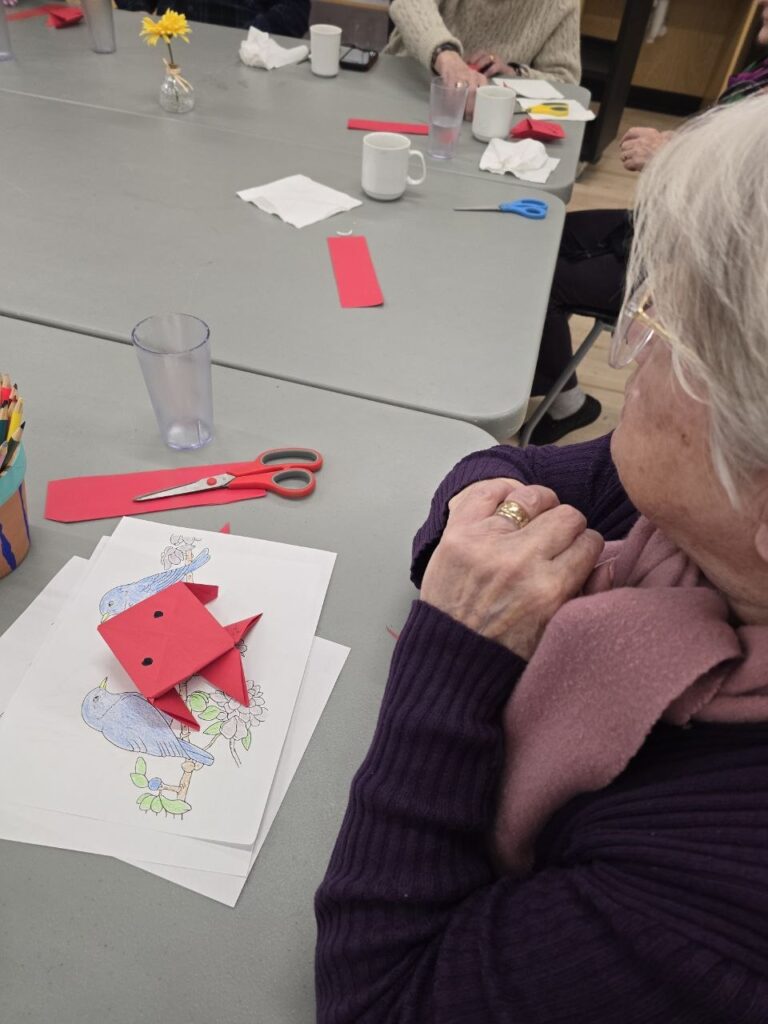
    In Persian tradition, the fish is a powerful symbol of new beginnings and life. It is often a key part of the Haft-sin table—the traditional New Year display. To bring this tradition into our space, we decided to spend the afternoon practicing the ancient art of origami to create our own paper fish.

    The Practice: More Than Just Folding

    Like all our origami sessions, this project was carefully chosen to match the abilities of the group. We took it one step at a time, turning flat sheets of paper into something three-dimensional.

    While it looks like “just paper folding,” this exercise is actually a workout for the mind and body:

    • Precision & Pressure: Participants practiced controlling the pressure of their hands to get that perfect, crisp edge.
    • Geometric Language: We used the session to talk about geometry—identifying diagonals, corners, and edges. It’s a great way to keep the brain sharp and focused on spatial recognition.
    • Dexterity: The small, intentional movements required for folding are excellent for maintaining hand-eye coordination.

    The Conversation: From Traditions to Taste Buds

    As our hands stayed busy, we shared stories about why the fish is so important across the globe—from Farsi and Chinese traditions to the deep roots of the First Nations here in Canada.

    But the best part of the afternoon was when the conversation turned personal. I asked the group about their own memories: Who here was the family’s best fisherman? What is your favorite way to cook a fresh catch? We talked about everything from secret seafood recipes to childhood trips to the docks. It wasn’t just an art class; it was a trip down memory lane.

    The “New Pet”

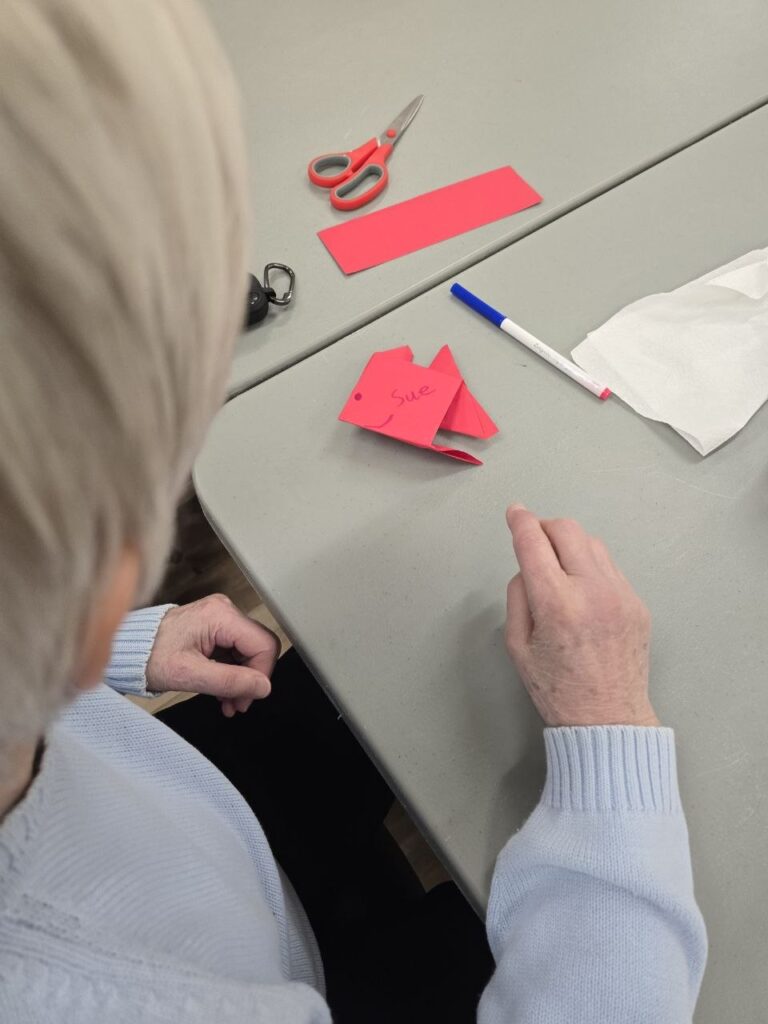
    The afternoon ended with a moment of pure joy. One of our members, Sue, looked at her finished origami fish and declared that she felt so connected to it, she couldn’t possibly talk about eating fish anymore—it was her new pet!

    The room immediately filled with laughter as everyone started joking with her about her “low-maintenance” companion. That sound of shared laughter is exactly why we do what we do.

    In our group, we don’t just make art; we make connections. And as we head into the new year, it’s clear that these small paper fish have brought a whole lot of life into the room.

  • Mirror, Mirror: Exploring Identity through Character Design

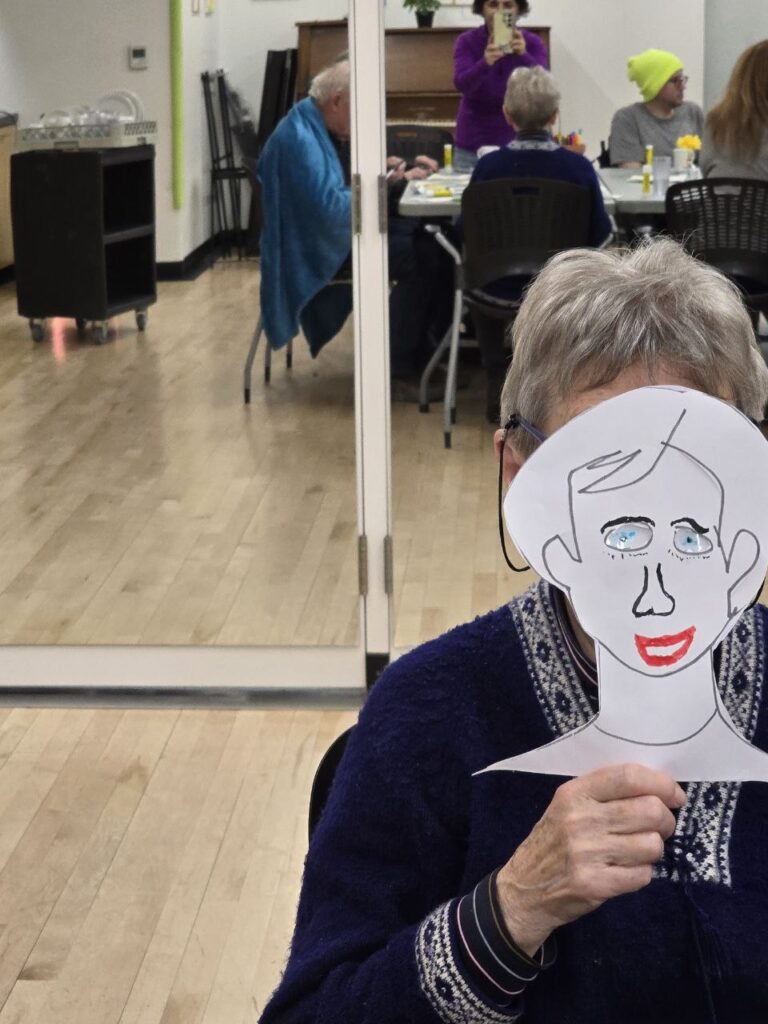
    In our latest session at the My Lions Gate Break Program, we spent the afternoon talking about something we often take for granted: our faces. Our faces are how we communicate with the world; every movement of the brow or curve of the lip tells a story about how we are feeling.

    I wanted to find a way to explore this idea of identity and expression through a hands-on “Character Design” exercise. The goal was simple but profound: to look closely, to recognize ourselves, and to have a bit of fun with what we see.

    The Process

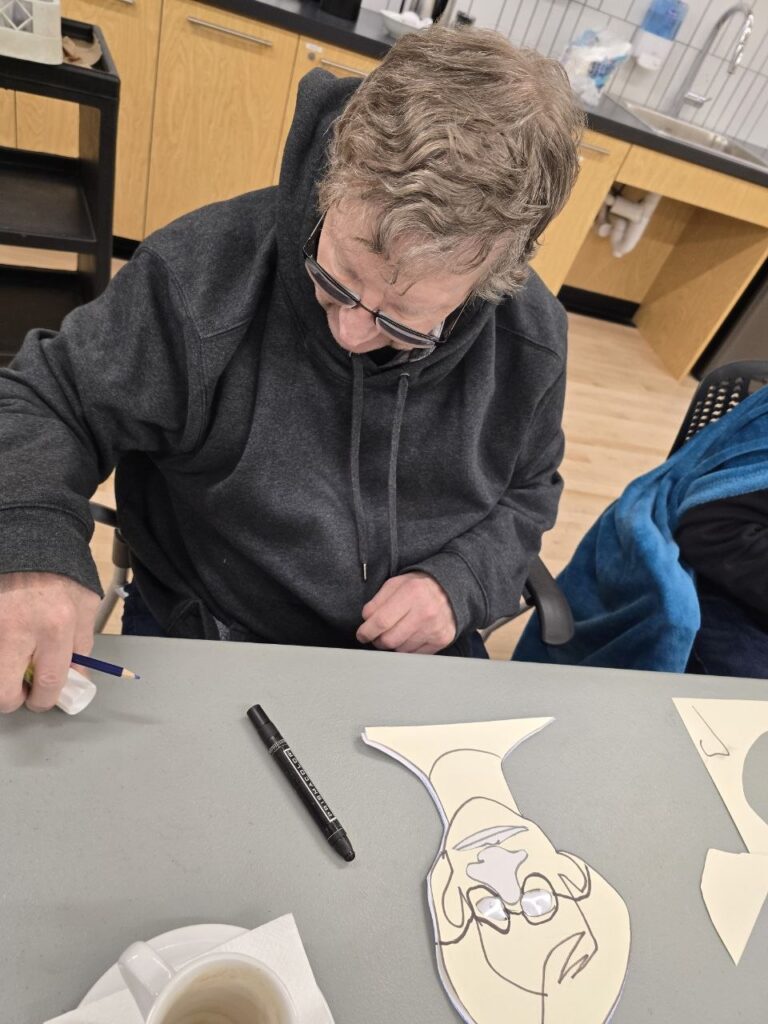
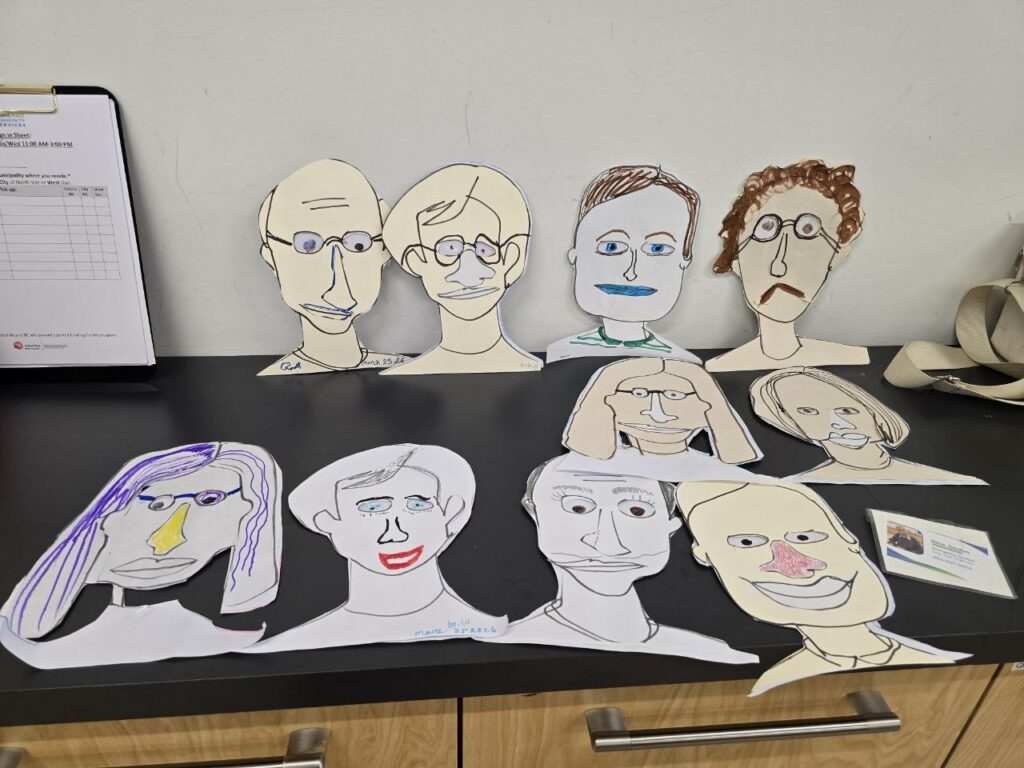
    To make the project accessible and successful for everyone, I prepared a variety of hand-drawn templates. I drew about 20 different face shapes—some long, some round, some angular—inspired by the diverse faces in our own group. I did the same for hair (bangs, bobs, and bold styles) and facial features like eyes, noses, and lips.

    The activity followed a few creative steps:

    1. Reflection: Each participant was given a mirror. I asked them to really look at themselves—not just a passing glance, but a moment of self-identification.
    2. Selection: Participants searched through the templates to find the features they felt most closely matched their own.
    3. Dexterity: Using scissors and glue, they cut out their chosen features and began “building” their face on a base sheet.
    4. Personalization: Finally, they used Sharpies and crayons to add the finishing touches—glasses, jewelry, or favorite colors.

    The Result: More than just an Illustration

    The room was filled with laughter as the portraits came together. By “exaggerating” their own features, the participants weren’t just making a drawing; they were experiencing what it’s like to be an illustrator.

    Why this exercise mattered:

    • Physical Dexterity: The simple acts of cutting and gluing are vital for maintaining fine motor skills and hand-eye coordination.
    • Cognitive Focus: Looking in the mirror and matching shapes requires a high level of attention to detail and self-awareness.
    • Social Connection: Seeing each other’s work sparked so much conversation. It was a beautiful reminder that while dementia may change how we process the world, our unique “character” and our sense of humor remain.

    There is something incredibly powerful about looking in a mirror, choosing a smile that looks like yours, and sticking it down on paper. It’s a way of saying, “This is me, and I’m still here.”

  • Rhythm and Reach: The Magic of the Parachute

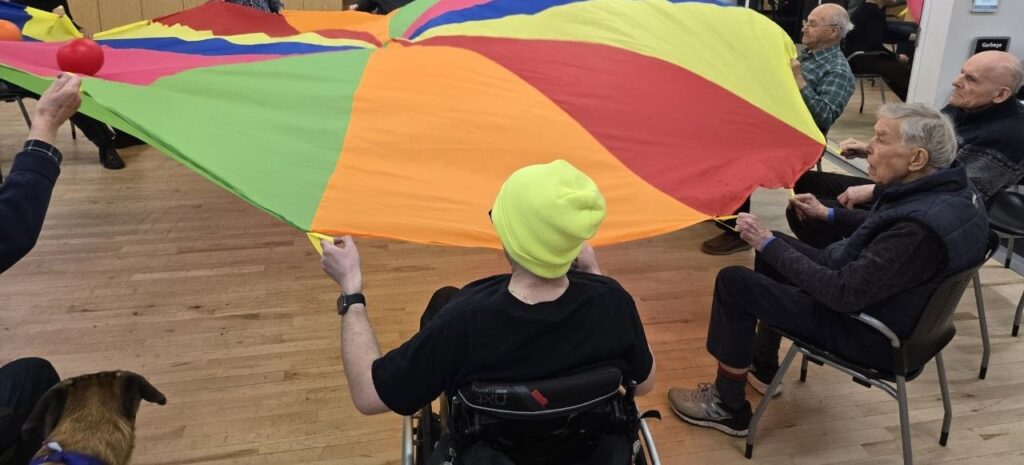
    In our group, we believe that exercise should never feel like a chore. The best way to keep the body moving and the heart pumping is to turn fitness into a game. Today, we brought out one of our favorite tools: The Giant Parachute.

    It’s a simple piece of colorful fabric, but when you add music, a few colorful balls, and a room full of determined people, it becomes a powerful way to build strength and connection.

    The Game: Rhythm, Song, and Balance

    We put on a playlist of familiar, classic songs—the kind that are tucked away in the “long-term memory” vault. As the first notes hit, the energy in the room shifted. Some members immediately began singing along to every word, while others hummed the melody.

    The challenge was twofold:

    1. Move to the Beat: Everyone held onto the edge of the parachute, waving it up and down in time with the rhythm of the music.
    2. The “Stay on Board” Challenge: We dropped several balls into the center. The goal for the entire group was to keep the parachute moving enough to stay in sync with the song, but steady enough so the balls wouldn’t fly off the edge!

    Why “Play” is Serious Business

    While we were laughing and singing, our bodies and brains were doing some heavy lifting:

    • Upper Body Strength: Constantly waving the parachute is a fantastic workout for the shoulders, arms, and core. Because the group is focused on the balls, they often don’t even realize how many “reps” they are doing!
    • Cognitive Recall: Singing familiar lyrics is a powerful tool for memory. It activates parts of the brain that remain strong even as dementia progresses, providing a huge boost of confidence.
    • Social Coordination: This is a “one goal” activity. You can’t keep the balls on the surface alone; you have to watch your neighbors, adjust your height, and work together. It builds a beautiful sense of “we are in this together.”

    The Finish Line

    By the end of the song, the room was buzzing. There’s something about the combination of music and physical movement that clears the “brain fog” and leaves everyone feeling energized.

    Seeing a group of people working in perfect harmony to keep a few balls from falling—all while belt out a favorite tune—is a reminder that joy is one of the best medicines we have.