In our latest session at the My Lions Gate Break Program, we spent the afternoon talking about something we often take for granted: our faces. Our faces are how we communicate with the world; every movement of the brow or curve of the lip tells a story about how we are feeling.
I wanted to find a way to explore this idea of identity and expression through a hands-on “Character Design” exercise. The goal was simple but profound: to look closely, to recognize ourselves, and to have a bit of fun with what we see.
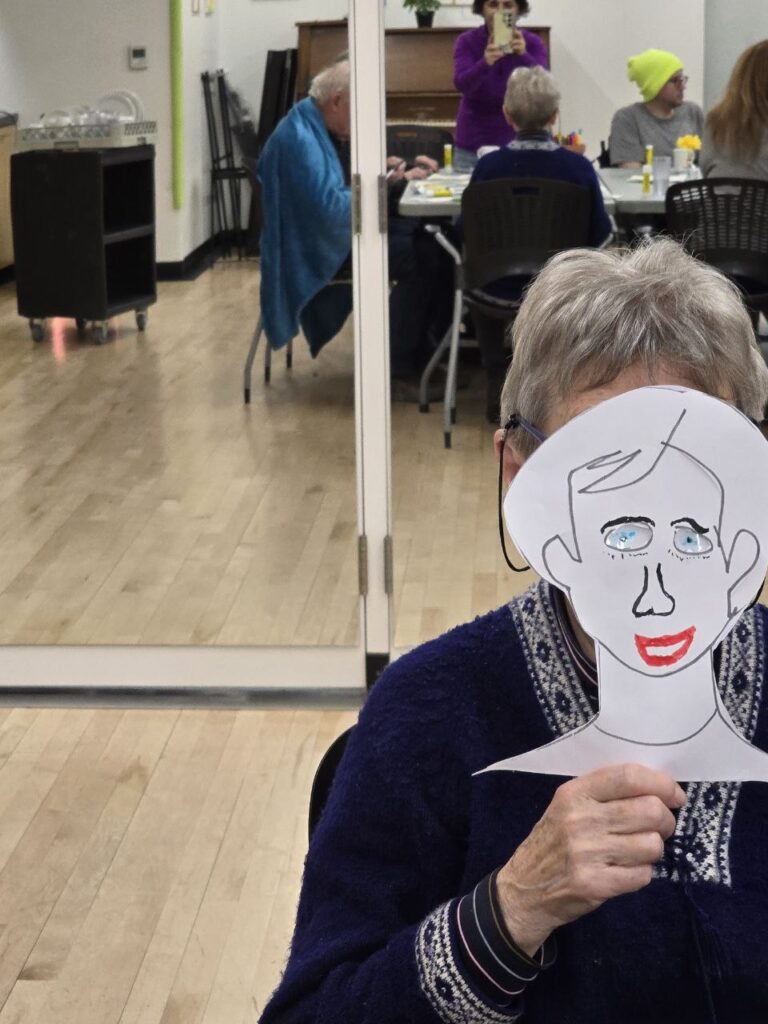
The Process
To make the project accessible and successful for everyone, I prepared a variety of hand-drawn templates. I drew about 20 different face shapes—some long, some round, some angular—inspired by the diverse faces in our own group. I did the same for hair (bangs, bobs, and bold styles) and facial features like eyes, noses, and lips.
The activity followed a few creative steps:
- Reflection: Each participant was given a mirror. I asked them to really look at themselves—not just a passing glance, but a moment of self-identification.
- Selection: Participants searched through the templates to find the features they felt most closely matched their own.
- Dexterity: Using scissors and glue, they cut out their chosen features and began “building” their face on a base sheet.
- Personalization: Finally, they used Sharpies and crayons to add the finishing touches—glasses, jewelry, or favorite colors.
The Result: More than just an Illustration
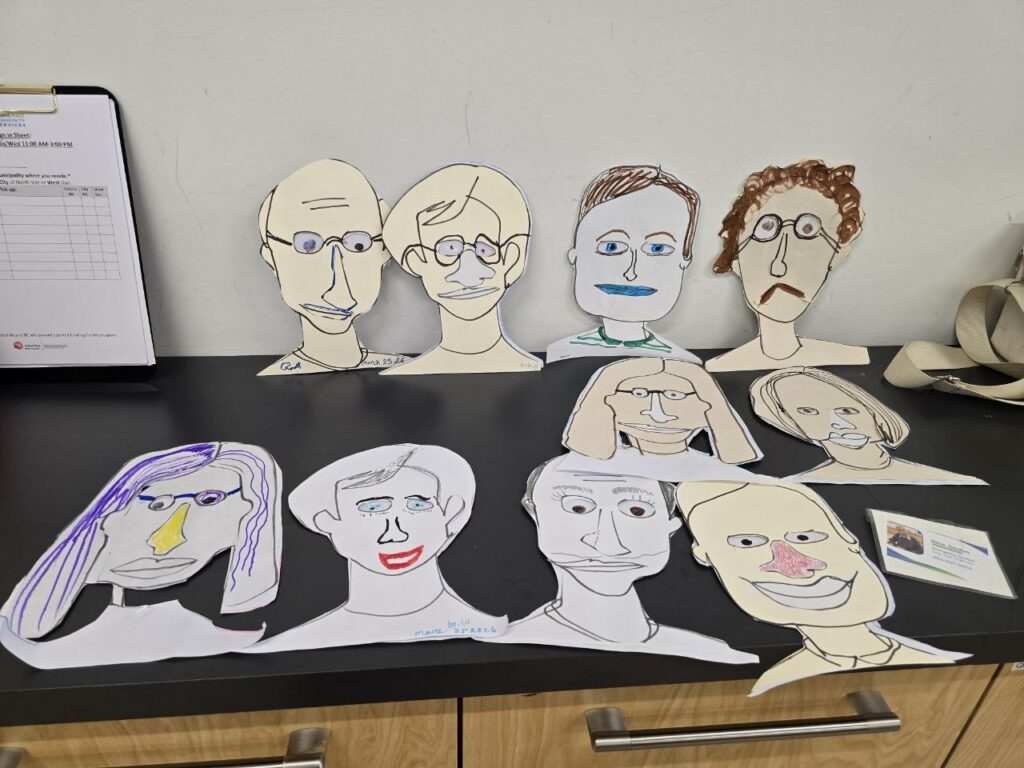
The room was filled with laughter as the portraits came together. By “exaggerating” their own features, the participants weren’t just making a drawing; they were experiencing what it’s like to be an illustrator.
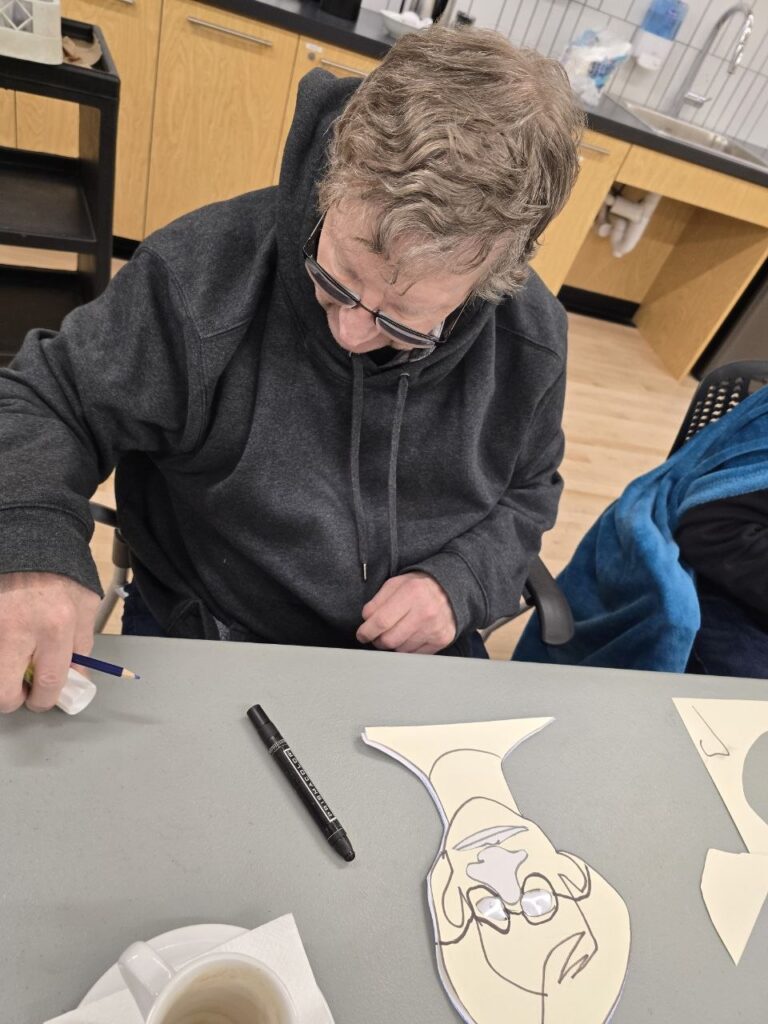
Why this exercise mattered:
- Physical Dexterity: The simple acts of cutting and gluing are vital for maintaining fine motor skills and hand-eye coordination.
- Cognitive Focus: Looking in the mirror and matching shapes requires a high level of attention to detail and self-awareness.
- Social Connection: Seeing each other’s work sparked so much conversation. It was a beautiful reminder that while dementia may change how we process the world, our unique “character” and our sense of humor remain.
There is something incredibly powerful about looking in a mirror, choosing a smile that looks like yours, and sticking it down on paper. It’s a way of saying, “This is me, and I’m still here.”
Leave a Reply